Saving Grasslands

The National Park Service (2015) describes that wildfires, while normally seen as destructive forces, are actually critical to maintaining grasslands. They suppress shrubs and woody plants from proliferating, which ensures that it remains a grassland and not a forest. Fires also enable the re-seeding of native grasses. The main source of fire ignition without human intervention is lightning, but the practice of burning harkens back to Native Americans in pre-colonial times. Even bison prefer grazing from recently burned areas (National Park Service, 2015).

Grasslands are able to withstand fires because of where their apical meristems are, or the point from which they grow. “In grasses, these points are located beneath the soil surface. This unique adaptation protects them from disturbances that destroy or seriously damage other plants” (Ducks Unlimited, n.d.).

Continue reading

Implications of Offshore Pipelines on Local Marine Biodiversity

In 2017, North American energy infrastructure company Williams Transco proposed a 23.4-mile, 26 inch diameter pipeline as an expansion to its current subsea (below seafloor) framework that delivers natural gas to New York City and surrounding areas. This study delves into the environmental significance of the Northeast Supply Enhancement Pipeline, ascertaining that despite its projected distribution of 400 million cubic feet of natural gas per day to residents, construction will cause too much disturbance to 14,000 acres of marine habitat across the Lower Bay of New York’s harbor. This potential disturbance is supported by peer-reviewed scientific studies and literature on the structure and use of pipelines, as well as Williams Transco’s safety records. While receiving acceptable review from the Federal Energy Regulatory Commission (FERC) with regards to environmental impact, past failures of similar projects signifies too much risk to local marine biodiversity.

Continue reading

Ring-Tailed Lemurs!

On any given day, a visitor may see a little more than a dozen ring-tailed lemurs (Lemur catta) at the Bronx Zoo’s Madagascar exhibit. It is a building that also houses fossa, radiated tortoises, hissing cockroaches, crocodiles, mongooses, and red ruffed lemurs, among many other species of animals endemic to Madagascar. The exhibit recently saw its tenth year anniversary, and I celebrated by paying a visit to my favorite feature, the Spiny Forest, where the ring-tailed lemurs are found.

Continue reading

Saving Lives With The Sea Squirt

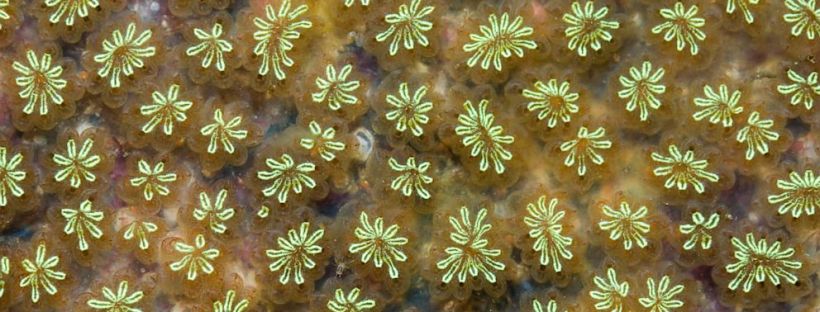
Meet the sea squirt: the golden star, a tiny, unassuming creature that could just be the answer to one of the greatest medical pursuits.

Scientifically termed Botryllus schlosseri, the sea squirt is a type of invertebrate that has a vasculature heart system and bears the most similarities to humans among all invertebrates. It even has 77 percent of genes that are found in humans. It has also been discovered that these marine filter feeders are able to regenerate solely through their blood vessels.

This breakthrough poses a shocking, almost inconceivable possibility: scientists could someday extract the sea squirt’s life saving secret and apply it to humans, allowing an injured person to redevelop a limb or even safely and easily accept a new organ. This life-saving capability is offset by the sea squirt’s destructive behavior.

Continue reading