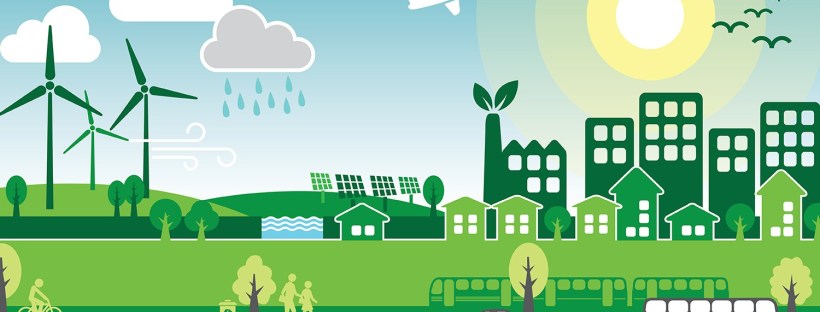
Adaption + Mitigation = Resilience

Regarding human responses to climate change, both adaptation and mitigation efforts are necessary. According to a study published in Habitat International, significant changes in our global climate cannot be avoided at this point (Hamin et al, 2008). This fact highlights the importance of adaptive action. Adaptation is meant to minimize the impacts of unavoidable outcomes due to climate change. NASA provides examples of this which include “building flood defenses, planning for heatwaves and higher temperatures, and improving water storage and use” (NASA, 2020).

On the other hand, mitigation efforts seek to continue the work of reducing greenhouse gas emissions. In a way, these actions support adaption because, according to the same study, unmitigated climate change would likely overshoot our ability to adapt by any successful measure. The oceans, forests, and soil act as sinks that store greenhouse gases. An example of mitigation would be supporting the capacity of these sinks such as by ensuring the intactness of large swaths of forests. Whereas adaptation supports present needs, mitigation addresses the future (NASA, 2020).

Continue reading
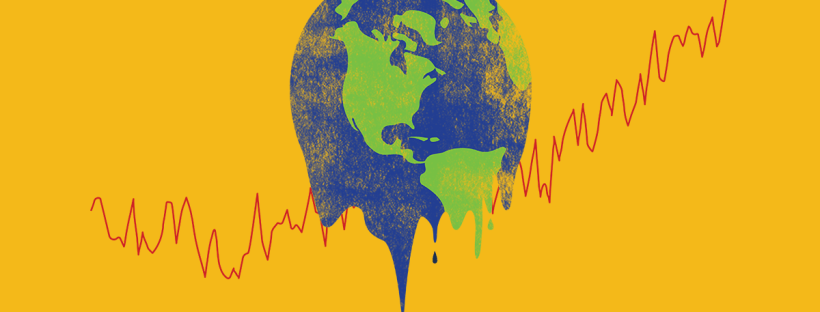
Perceptions About Climate Change Based on Two Recent Articles

Research by Moore et al., (2019) studied social media discussions throughout the United States. They found that as communities experience more weather anomalies, the less remarkable these events become. This is compared to the boiling frog effect, which is a fable that describes a frog’s lack of danger awareness when it is introduced to gradually boiling water (Sedgwick, 1888).

Continue reading

Saving Grasslands

The National Park Service (2015) describes that wildfires, while normally seen as destructive forces, are actually critical to maintaining grasslands. They suppress shrubs and woody plants from proliferating, which ensures that it remains a grassland and not a forest. Fires also enable the re-seeding of native grasses. The main source of fire ignition without human intervention is lightning, but the practice of burning harkens back to Native Americans in pre-colonial times. Even bison prefer grazing from recently burned areas (National Park Service, 2015).

Grasslands are able to withstand fires because of where their apical meristems are, or the point from which they grow. “In grasses, these points are located beneath the soil surface. This unique adaptation protects them from disturbances that destroy or seriously damage other plants” (Ducks Unlimited, n.d.).

Continue reading

Implications of Offshore Pipelines on Local Marine Biodiversity

In 2017, North American energy infrastructure company Williams Transco proposed a 23.4-mile, 26 inch diameter pipeline as an expansion to its current subsea (below seafloor) framework that delivers natural gas to New York City and surrounding areas. This study delves into the environmental significance of the Northeast Supply Enhancement Pipeline, ascertaining that despite its projected distribution of 400 million cubic feet of natural gas per day to residents, construction will cause too much disturbance to 14,000 acres of marine habitat across the Lower Bay of New York’s harbor. This potential disturbance is supported by peer-reviewed scientific studies and literature on the structure and use of pipelines, as well as Williams Transco’s safety records. While receiving acceptable review from the Federal Energy Regulatory Commission (FERC) with regards to environmental impact, past failures of similar projects signifies too much risk to local marine biodiversity.

Continue reading

Ring-Tailed Lemurs!

On any given day, a visitor may see a little more than a dozen ring-tailed lemurs (Lemur catta) at the Bronx Zoo’s Madagascar exhibit. It is a building that also houses fossa, radiated tortoises, hissing cockroaches, crocodiles, mongooses, and red ruffed lemurs, among many other species of animals endemic to Madagascar. The exhibit recently saw its tenth year anniversary, and I celebrated by paying a visit to my favorite feature, the Spiny Forest, where the ring-tailed lemurs are found.

Continue reading

Earth’s Forests: Reducing Emissions from Deforestation and Degradation

While the U.S. government’s stance on climate change makes a quick about-face, I’ve been hearing more and more about a concept called  “REDD”, its implications on the environment, and its developing initiatives to keeping forests intact. REDD stands for reducing emissions from deforestation and degradation.

By definition, deforestation is the conversion of a forest to another use, and degradation is the more gradual loss of its biomass. REDD, therefore, is the protection of forests currently under threat by those two factors.

Earth’s forests have been disappearing for years. Aside from knowing that forests are home to our planet’s precious wildlife, I never questioned the idea of forest preservation, thinking it was something that simply should make sense. But there wasn’t much truth seeking done on my part, so I set out to learn about REDD and its role in the larger discussion surrounding climate change. Here’s what I discovered – starting from the roots.

Continue reading

CUNY Divest and Youth Action in New York City

Along with the People’s Climate March late last year, we’ve been seeing rapidly escalating and sweeping environmental actions largely fortified by young people all over the world!

Take Global Divestment Day which took the world by storm a few weeks ago. Totaling 450 rallies held in 60 countries, hundreds of thousands of young people spoke out in solidarity against Big Oil and for increased focus on renewable energy. The Fossil Fuel Divestment Movement has grown so much over the past few years, borne largely out of increasingly ominous scientific reports on climate change, tragic extreme weather events, and the expansion of oil drilling and exploration despite nonstop news of disastrous accidents.

Over 25 universities and 42 cities worldwide have already committed to divestment. Many others are in the process – or at least have a running divestment campaign working to achieve this 3-part goal:

Continue reading

Do You Know Your Water Footprint?

Sometimes it’s difficult to feel connected to water shortage matters in other places, especially when we’re on opposite coasts of the country or half a world away. But while it may seem like the issue is too big, or too far, and our everyday actions as individuals barely make a drop in the bucket, that’s simply not true!

Earlier this week, GRACE Communications Foundation launched a brand-new online footprint calculator that is focused on household water consumption. The interactive questionnaire uses data from the Water Footprint Network, the U.S. Geological Survey, the U.S. Energy Information Administration, the U.S. Environmental Protection Agency and several other sources to calculate an individual’s water footprint. It takes into account the indoor/outdoor water usage we’re all familiar with, like doing the laundry and washing the car:

Continue reading
landfill, electronic-waste, usell, ink-raman, gadget-hoarding

uSell: Fighting Gadget Hoarding and Landfill Waste

There’s a good chance you’ve seen the uSell commercials on television, urging you to sell your old and unused electronics. It’s a growing issue that needs to be addressed more and more lately, as new technologies seem to upgrade and appear on shelves before we’ve even adjusted to our current devices. In fact, the value of iPhones depreciate at a rate of 5% per month, and Androids at 10%.

Nik Raman, founder and COO of uSell, hopes to combat “gadget hoarding,” a condition many people may not be aware they are experiencing. Over the years, uSell has also prevented more than 200,000 devices from ending up in landfills.

Research made by the company presents some data that may surprise you:

Continue reading

Obama Administration Proposes More Alaskan Wilderness Protection

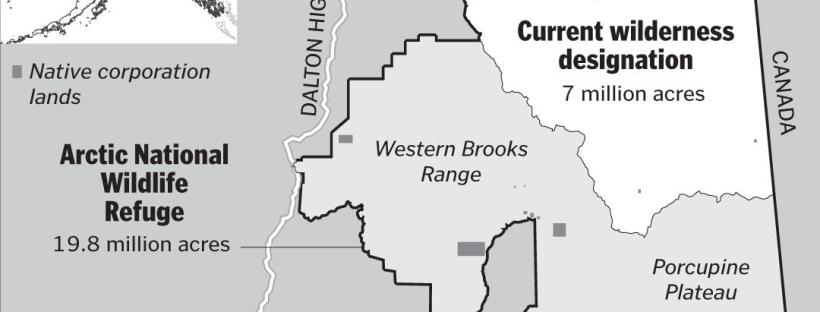
Sparking immediate criticism from key Alaskan officials and the Republican-controlled Congress, the Obama administration recently revealed its plans to protect a little over 12 million acres of land in the Alaskan coastal plain as wilderness. If approved, this move will lawfully declare the area off limits to all gas and oil production and other developments, essentially leaving the territory untouched. Along with his stance on the Keystone XL Pipeline, this will be one of the biggest measures Obama has taken as he sets about keeping true to his promise to be an advocate for the environment.

The area in contention is located in Alaska’s North Slope region and is nestled within the Arctic National Wildlife Refuge (ANWR), the largest wildlife refuge in the country. While the issue may seem to have garnered the media’s attention only lately, the debate whether to protect this land or open it up to drilling and energy exploration has actually been in place for almost 40 years.

Continue reading

Saving Lives With The Sea Squirt

Meet the sea squirt: the golden star, a tiny, unassuming creature that could just be the answer to one of the greatest medical pursuits.

Scientifically termed Botryllus schlosseri, the sea squirt is a type of invertebrate that has a vasculature heart system and bears the most similarities to humans among all invertebrates. It even has 77 percent of genes that are found in humans. It has also been discovered that these marine filter feeders are able to regenerate solely through their blood vessels.

This breakthrough poses a shocking, almost inconceivable possibility: scientists could someday extract the sea squirt’s life saving secret and apply it to humans, allowing an injured person to redevelop a limb or even safely and easily accept a new organ. This life-saving capability is offset by the sea squirt’s destructive behavior.

Continue reading

Close Call for the Keystone XL Pipeline

Today, the Senate’s voting results defeated Bill 2280: the construction of a 1,179-mile-long pipeline meant to deliver crude oil from Canadian tar sands to oil refineries and existing pipelines in the U.S., ultimately distributing over 800,000 barrels a day to the Texas Gulf Coast. The pipeline has been a hugely controversial topic for six years, ever since TransCanada Corporation put in the request for a cross-border permit to build.

Environmental leaders and many Democrats are definitely applauding this victory, but it was much too close for comfort: as of 5:55 PM on Tuesday, November 18th, the pipeline failed to pass by only one vote.

Continue reading

Tipping Point Set for Global Warming

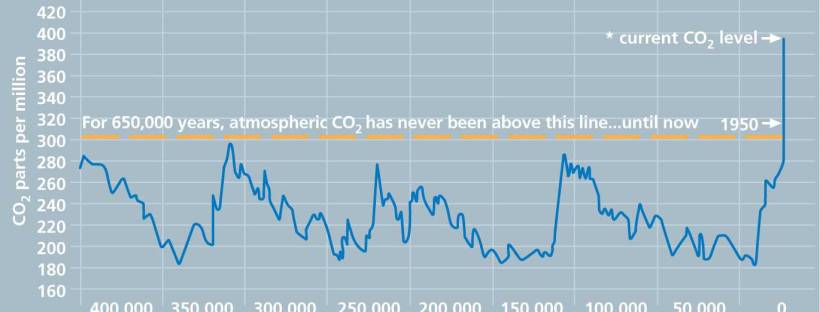
A new study reveals that by the year 2047, climate change will reach its tipping point and every year after that will be hotter than any since 2005.

Here is how some scientists have been reacting to this discovery.

As long as no significant changes are made to the pace in which humans emit carbon, the planet could reach the point of no return in only 34 years. As emphasized in a published paper by biodiversity scientist Camilo Mora, the coldest year in the future will be warmer than the hottest year in the past.

I recommend reading that five more times to fully grasp the gravity of the statement. Continue reading