Adaption + Mitigation = Resilience

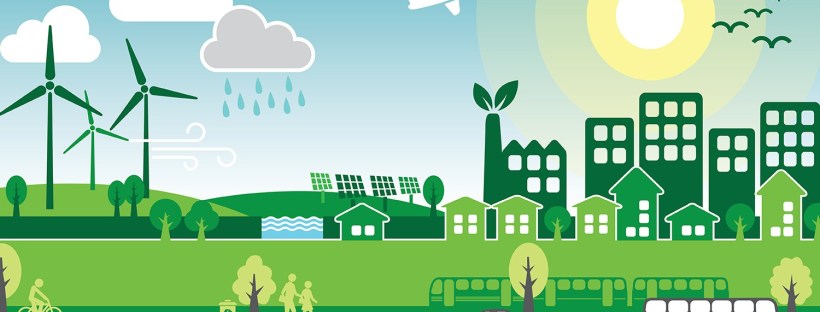
Regarding human responses to climate change, both adaptation and mitigation efforts are necessary. According to a study published in Habitat International, significant changes in our global climate cannot be avoided at this point (Hamin et al, 2008). This fact highlights the importance of adaptive action. Adaptation is meant to minimize the impacts of unavoidable outcomes due to climate change. NASA provides examples of this which include “building flood defenses, planning for heatwaves and higher temperatures, and improving water storage and use” (NASA, 2020).

On the other hand, mitigation efforts seek to continue the work of reducing greenhouse gas emissions. In a way, these actions support adaption because, according to the same study, unmitigated climate change would likely overshoot our ability to adapt by any successful measure. The oceans, forests, and soil act as sinks that store greenhouse gases. An example of mitigation would be supporting the capacity of these sinks such as by ensuring the intactness of large swaths of forests. Whereas adaptation supports present needs, mitigation addresses the future (NASA, 2020).

Continue reading
Perceptions About Climate Change Based on Two Recent Articles

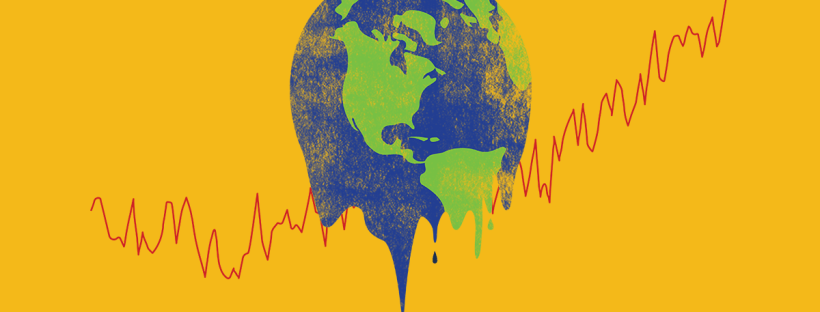
Research by Moore et al., (2019) studied social media discussions throughout the United States. They found that as communities experience more weather anomalies, the less remarkable these events become. This is compared to the boiling frog effect, which is a fable that describes a frog’s lack of danger awareness when it is introduced to gradually boiling water (Sedgwick, 1888).

Continue reading

Implications of Offshore Pipelines on Local Marine Biodiversity

In 2017, North American energy infrastructure company Williams Transco proposed a 23.4-mile, 26 inch diameter pipeline as an expansion to its current subsea (below seafloor) framework that delivers natural gas to New York City and surrounding areas. This study delves into the environmental significance of the Northeast Supply Enhancement Pipeline, ascertaining that despite its projected distribution of 400 million cubic feet of natural gas per day to residents, construction will cause too much disturbance to 14,000 acres of marine habitat across the Lower Bay of New York’s harbor. This potential disturbance is supported by peer-reviewed scientific studies and literature on the structure and use of pipelines, as well as Williams Transco’s safety records. While receiving acceptable review from the Federal Energy Regulatory Commission (FERC) with regards to environmental impact, past failures of similar projects signifies too much risk to local marine biodiversity.

Continue reading

Earth’s Forests: Reducing Emissions from Deforestation and Degradation

While the U.S. government’s stance on climate change makes a quick about-face, I’ve been hearing more and more about a concept called  “REDD”, its implications on the environment, and its developing initiatives to keeping forests intact. REDD stands for reducing emissions from deforestation and degradation.

By definition, deforestation is the conversion of a forest to another use, and degradation is the more gradual loss of its biomass. REDD, therefore, is the protection of forests currently under threat by those two factors.

Earth’s forests have been disappearing for years. Aside from knowing that forests are home to our planet’s precious wildlife, I never questioned the idea of forest preservation, thinking it was something that simply should make sense. But there wasn’t much truth seeking done on my part, so I set out to learn about REDD and its role in the larger discussion surrounding climate change. Here’s what I discovered – starting from the roots.

Continue reading

CUNY Divest and Youth Action in New York City

Along with the People’s Climate March late last year, we’ve been seeing rapidly escalating and sweeping environmental actions largely fortified by young people all over the world!

Take Global Divestment Day which took the world by storm a few weeks ago. Totaling 450 rallies held in 60 countries, hundreds of thousands of young people spoke out in solidarity against Big Oil and for increased focus on renewable energy. The Fossil Fuel Divestment Movement has grown so much over the past few years, borne largely out of increasingly ominous scientific reports on climate change, tragic extreme weather events, and the expansion of oil drilling and exploration despite nonstop news of disastrous accidents.

Over 25 universities and 42 cities worldwide have already committed to divestment. Many others are in the process – or at least have a running divestment campaign working to achieve this 3-part goal:

Continue reading

Do You Know Your Water Footprint?

Sometimes it’s difficult to feel connected to water shortage matters in other places, especially when we’re on opposite coasts of the country or half a world away. But while it may seem like the issue is too big, or too far, and our everyday actions as individuals barely make a drop in the bucket, that’s simply not true!

Earlier this week, GRACE Communications Foundation launched a brand-new online footprint calculator that is focused on household water consumption. The interactive questionnaire uses data from the Water Footprint Network, the U.S. Geological Survey, the U.S. Energy Information Administration, the U.S. Environmental Protection Agency and several other sources to calculate an individual’s water footprint. It takes into account the indoor/outdoor water usage we’re all familiar with, like doing the laundry and washing the car:

Continue reading

Tipping Point Set for Global Warming

A new study reveals that by the year 2047, climate change will reach its tipping point and every year after that will be hotter than any since 2005.

Here is how some scientists have been reacting to this discovery.

As long as no significant changes are made to the pace in which humans emit carbon, the planet could reach the point of no return in only 34 years. As emphasized in a published paper by biodiversity scientist Camilo Mora, the coldest year in the future will be warmer than the hottest year in the past.

I recommend reading that five more times to fully grasp the gravity of the statement. Continue reading