A new study reveals that by the year 2047, climate change will reach its tipping point and every year after that will be hotter than any since 2005.
Here is how some scientists have been reacting to this discovery.
As long as no significant changes are made to the pace in which humans emit carbon, the planet could reach the point of no return in only 34 years. As emphasized in a published paper by biodiversity scientist Camilo Mora, the coldest year in the future will be warmer than the hottest year in the past.
I recommend reading that five more times to fully grasp the gravity of the statement.
As winter looms closer, setting an unmistakable chill over New York City, it may be difficult to grasp the weight of the study’s revelation. Global warming is not a novel idea by any means, but many people consider the idea improbable – or at the very least a sort of futuristic myth, a vague and far-off idea that would not happen in the span of their lifetimes.
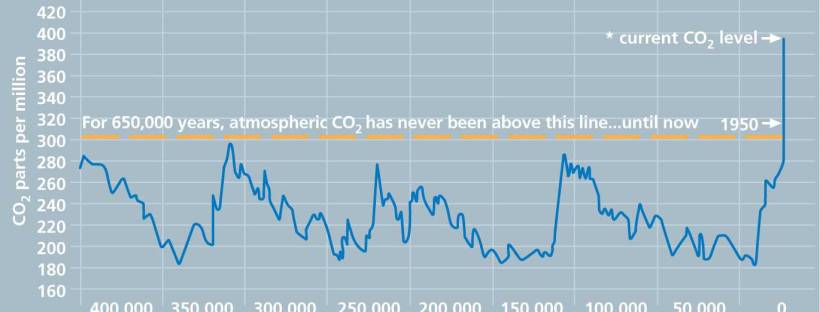
James Hansen, previous head of NASA’s Goddard Institute for Space Studies and a climate change researcher, declared that a safe level of carbon dioxide in the atmosphere is 350 parts per million (ppm). But in May 2013, atmospheric concentrations of carbon dioxide surpassed 400 ppm for the first time. An Intergovernmental Panel on Climate Change (IPCC) report states that the earth’s centennial temperature increase is at about a steady one degree Celsius, with the likelihood of that rate doubling or tripling in upcoming years. It may not seem like much, but scientists warn us against this escalation, pronouncing that a two-degree threshold for global temperature increase is the hard limit. An increase of more than this specified figure would have destructive results for the planet and all who live on it.
Perhaps the most worrisome number, however, is that in order to reach this two-degree limit, humans can only emit 565 more gigatons of carbon into the atmosphere. At the current pace of emission, humanity will arrive at that point in only 15 years. The effects of global warming are gradual, which is perhaps why there has not been sufficient alarm despite numerous studies that have been presented over the years. They become largely ignored signs of caution and admonition. Without proper attention and discourse over the matter, earth’s inhabitants could suddenly find themselves facing a 23-inch rise in sea levels with an added four to eight inches due to melting polar ice.
Natural disasters such as Superstorm Sandy here in the United States and Typhoon Haiyan in the Philippines may become regular and progressively devastating occurrences. Nature’s order, when thrown out of sync, causes plants to bloom much earlier and migration patterns to change. Devastating droughts, heat waves, wildfires, smog, acid rain and great volcanic activity are all possible occurrences in the not-so-distant future. Wildlife will also be impacted by the changes. Disease-carrying insects may suddenly migrate to new areas. Widespread extinction of many other animals (not just polar bears) will occur, with marine life being one of the most heavily impacted.
With this bleak outlook of the years ahead, it may help to keep in mind that many of the ominous forecasts made in these studies begin with some variation of these three words: “if we continue.” So, for now, there is still a chance: 2047 need not be the end of life as we know it…
Not if we can help it!
(This article is featured in The Ticker, a Baruch College News Publication.)
Featured Photo: © National Ocean and Atmospheric Administration

 Literaria
One thought on “Tipping Point Set for Global Warming”